
While I was on vacation for the first half of July, I came home eager to make something. By chance, the project The Quilted Forest pulled for the month (#3) was a project I’d been thinking about, one I thought I could finish quickly, perfect for the two weeks I had left. All I needed to do was sandwich a quilt top, batting, and a backing to finish a quilt. Easy, right?
Nope. The top for this log cabin quilt has had a rough ride, which has caused me loads of trouble. Here’s how.
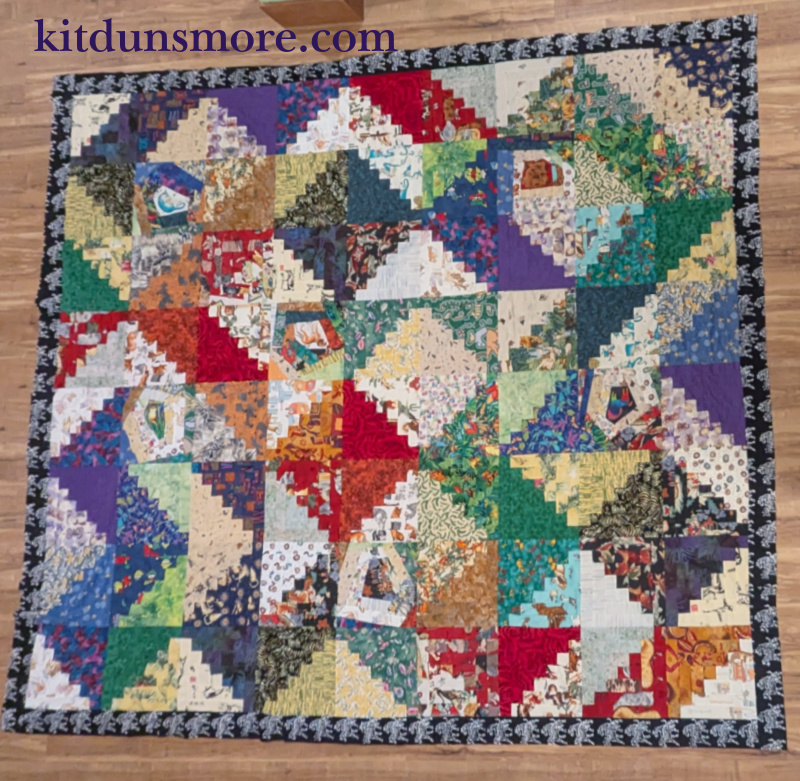
Quilt top and photo by Kit Dunsmore
I call this quilt my “novelty log cabin.” Novelty refers to the quirky themed fabrics I adore. I had a huge collection of them when I first thought of pairing contrasting fabrics to make log cabin blocks in 2001. The blocks were sewn into a top by the time I moved to Colorado in 2007. Unfortunately, I had a lazy moment, and I am regretting it bitterly now.
At the time, our bedroom was over our garage and got cold in the winter. We used a goose down duvet as a result. I wanted to use the log cabin quilt on our bed, but the next step in making it a quilt — basting — is my least favorite. Instead, I treated the top like a single piece of fabric, made a giant pillowcase out of it and some other fabric, and used it as a duvet cover.
It seemed like a good idea at the time.
Why do I regret it? So many reasons.
First of all, pieced quilt blocks are not all that sturdy. What I didn’t think of then but realize now is that we quilt tops to help support the seams. Stitching them to other layers reduces the stress on any one seam and keeps the blocks from pulling apart. My un-quilted duvet cover popped seams left and right. I would patch a block and then another one would rip open. Eventually, I got fed up, bought a duvet cover at the store, and took the log cabin off the bed.
Another down side to using a quilt top as a single layer was all the fraying that happened due to washing. So much fraying! The threads tangled together and wadded up all over the back of the top. Even before I started repairing the ripped seams, I spent hours snipping the clumps of thread off the back. Even lazy me knows better than to leave them there — the wads were so big they would have made my quilt lumpy.
The third reason I really regret using the top as a duvet cover is that it stretched some of the fabric. The log cabin blocks aren’t too bad, but I included some “improv” blocks, where I sewed strips to off-grain edges, which stretch easily. When I laid the quilt out on the floor, I realized that there were little hills where each of these blocks is. I haven’t actually figured out how I’m going to deal with that yet… I may just quilt in folds to make them flat again. Depends on whether or not lazy me wins (which as I’ve already demonstrated is often not a good thing.)


My fast finish turned into a long slog, and this doesn’t include figuring out how to make this quilt big enough for my bed! That’s a whole other nightmare, which I will share with you next week.
Have you ever caused yourself trouble by listening to your lazy self? Please tell me about it so I can feel better about this.

I can see why you’re frustrated, but it’s such a beautiful quilt that, once you’ve taken a few deep breaths, it’s worth fixing.
It’s one of those “could kick my past self” moments. I really thought this one would be a quick project. Silly me. We need another quilt for our bed, so I’m still quite interested in finishing it… but I think I’ll take a break first and come back to it well aware of what’s ahead.