
Part of my “go slow” plan for my May project of the month includes testing the pattern by making a practice bag before I start on the real thing. I initially picked matching materials for it in the hopes that I could use it if it doesn’t come out too badly. I’ve had to give up on that idea. My test bag is not going to look nice. So far, it’s a hot mess.

It started when I went to cut the external bag pieces from the leaf fabric I’d picked out. No matter how I ironed it, it wouldn’t lie flat until I cut off the selvage. Ignoring this warning sign, I identified the leaf pattern repeats and laid out the bag pattern pieces accordingly. I cut out my first piece and prepared to cut out the second. To my astonishment, the only way I could get the new piece’s leaves to match was to cut it on an angle. This is bad news. Off-grain fabric stretches easily, which makes the sewing tough.

For a moment, I planned on pushing through with this wonky fabric, but I was annoyed enough that I took a break instead. That gave me the time to realize this pattern is hard enough without the fabric making it even worse. I searched my stash for a replacement, but I didn’t have enough yardage of a single fabric, so I had to pull two.
Then, once the bag assembly was under way, I realized I’d made a mistake. I’d fused my stabilizer to some of the lining pieces instead of the exterior fabric. There was no point in fixing this problem. I was already making a bag with two sides that don’t match. Appearance was no longer important, so I could swap the stabilized lining pieces with the unstabilized exterior pieces and get on with it.

I did take the time to cut some new lining pieces. I wasn’t willing to sacrifice the expensive hand-dyed fabric I’d planned on for a bag I will probably just salvage parts from later. In the end, I cut the new lining from the wonky leaf fabric — on grain.
At this point, I thought my problems were over. Then I came to a top-stitching step I was entirely unaware of. It’s supposed to tack down the seam above the zipper which encases the webbing handle, but I couldn’t get it to work. I was lucky my sewing machine could sew through the thick webbing (go, Beatrice!). But the difference in thickness between the rest of the panel and the doubled webbing made for messy sewing no matter what I did. Finding a thinner, more flexible webbing is another task for my list.

I think this is the most difficult sewing project I have ever done. I’ve been quilting for thirty years, but this bag pattern is making me feel incompetent. On the upside, I’m learning tons. I even have some ideas of ways to tweak things to make it easier for me to construct.
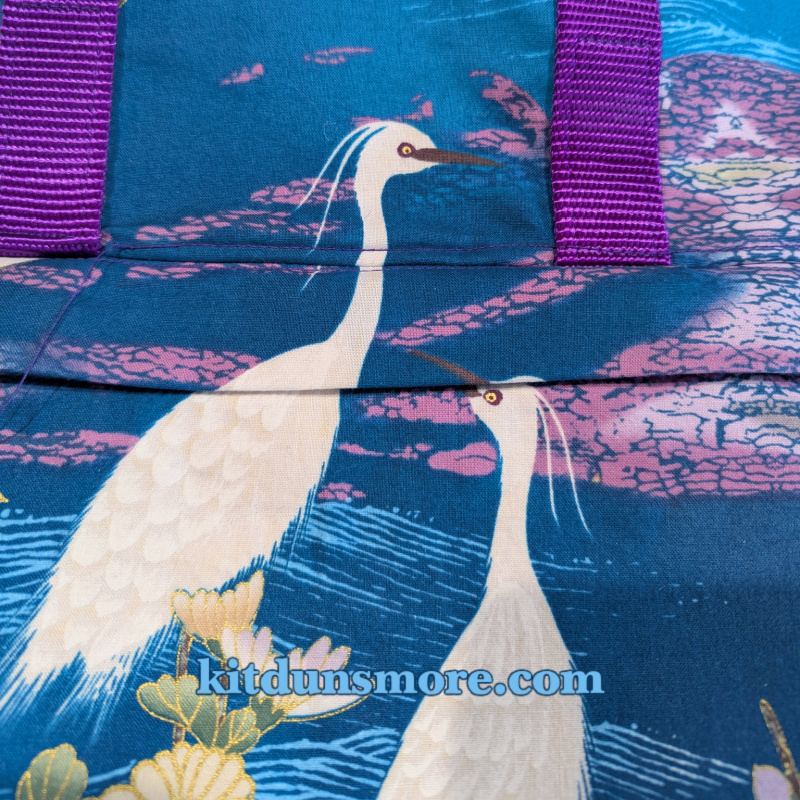
But that will take more testing… I hope it’s not this messy!

I thought you did quite well with the matching up.
Thanks. I’m hoping to do better on the final bag…